Sölden Clears FIS Snow Control as the 2026/27 World Cup Opens October 24: The Final Q4 Sourcing Window for Ski Straps and Snow Gear
Sölden, Austria — 19 October 2026. The 2026/27 alpine season has a confirmed starting gun. On Thursday 15 October, FIS officials completed the snow control on the Rettenbach Glacier and cleared the Audi FIS Ski World Cup opener for 24–25 October, as reported by SnowBrains and confirmed by the Sölden event programme. For brands and private-label buyers, that green light matters beyond race day: European retail has stopped asking whether the season starts on time and started asking what must be on shelf before the first powder weekend.
Sölden clears snow control: two giant slaloms confirmed
The opening weekend keeps its traditional shape. The women’s giant slalom runs on Saturday 24 October, the men’s race follows on Sunday 25 October, and both are two-run formats with the first run at 10:00 local time and the second at 13:00. The Rettenbach course is one of the more demanding early-season tests on the calendar, with gradients reaching 68 percent and a vertical drop of roughly 370 metres.
The start list brings the usual headlines: Marco Odermatt and Lucas Pinheiro Braathen on the men’s side, Austria’s Julia Scheib defending her Sölden win, and Mikaela Shiffrin expected to start, subject to the final list. Italy is without Sofia Goggia and Federica Brignone, both still recovering, while Marta Bassino returns after a season out.
Commercially, the timing matters more than the names. A passed snow control two weeks out tells the trade that the glacier circuit is functioning and that the first consumer-facing ski content of the winter lands on 24 October. Retail marketing calendars, rental fleets and demo programmes all key off that date.
Austria now leads the open-resort count
The wider picture is improving after a record-warm Alpine summer. J2Ski’s 15 October snow report counted eight Alpine areas open and noted that Austria has overtaken Chile and New Zealand for the most areas running, with five glaciers operating: Pitztal, Hintertux, Sölden, Stubai and Kitzsteinhorn. Sölden offers the most terrain at around 18 km, and the report recorded up to 20 cm of new snow above 1,600 m and 30 cm above 3,000 m — the lowest snowline of the autumn so far.
Not every opening has gone to plan. SnowStash’s mid-October guide notes that Titlis pushed its glacier opening back two weeks to 24 October, that Zermatt restarted only a handful of high-altitude lifts on 14 October after more than two months closed, the full resort due on 1 November, and that Finland’s Levi and Ruka are running on stored snow-farmed reserves with roughly 2.5 km each. The same guide cites GLAMOS data showing a 5.5 percent loss of Swiss glacier ice volume in 2025-26, the second-largest on record.
Thin early-season bases have a direct product consequence. When snow is marginal, resorts and rental operators lean harder on protection: tip and tail covers, padded sleeves and carrier straps that keep demo skis intact between transfers. Durability moves up the buying criteria list, and consumables that fail in week one become a warranty conversation.
A compressed trade calendar leaves little slack
The commercial calendar is tighter than usual. ISPO 2026 moves to Amsterdam from 3–5 November with more than 850 exhibitors confirmed, over 25,000 trade visitors expected and retailers including INTERSPORT, Ellis Brigham, JD Outdoor, Mountain Warehouse and Amazon engaged. In Munich, The Outdoor Industry Compass called this month’s Performance Days a record-breaking edition, with natural materials still gaining share in performance textiles.
The arithmetic is simple: the World Cup opener is 24 October, ISPO opens 10 days later, and most European buy plans for the winter 2027 assortment are shaped in that window. An accessory programme without a confirmed production slot before the shows tends to land on a later, more expensive schedule.
What buyers are reordering for the glacier season
The strongest reorder demand sits in the components that travel with the skis rather than on them. Adjustable hook-and-loop ski carrier straps remain the volume driver: two skis, one hand, no rattle on the gondola. Neoprene tip and tail protectors and padded snowboard sleeves with shoulder straps follow, driven by rental fleets and by travellers who check a bag once a year and expect it to survive.
Browse the full elite snowsports range and the equipment straps category for the current SKUs. The same hook-and-loop platform carries over into trail running and pickleball accessories, which lets distributors consolidate a single supplier across categories instead of managing four.
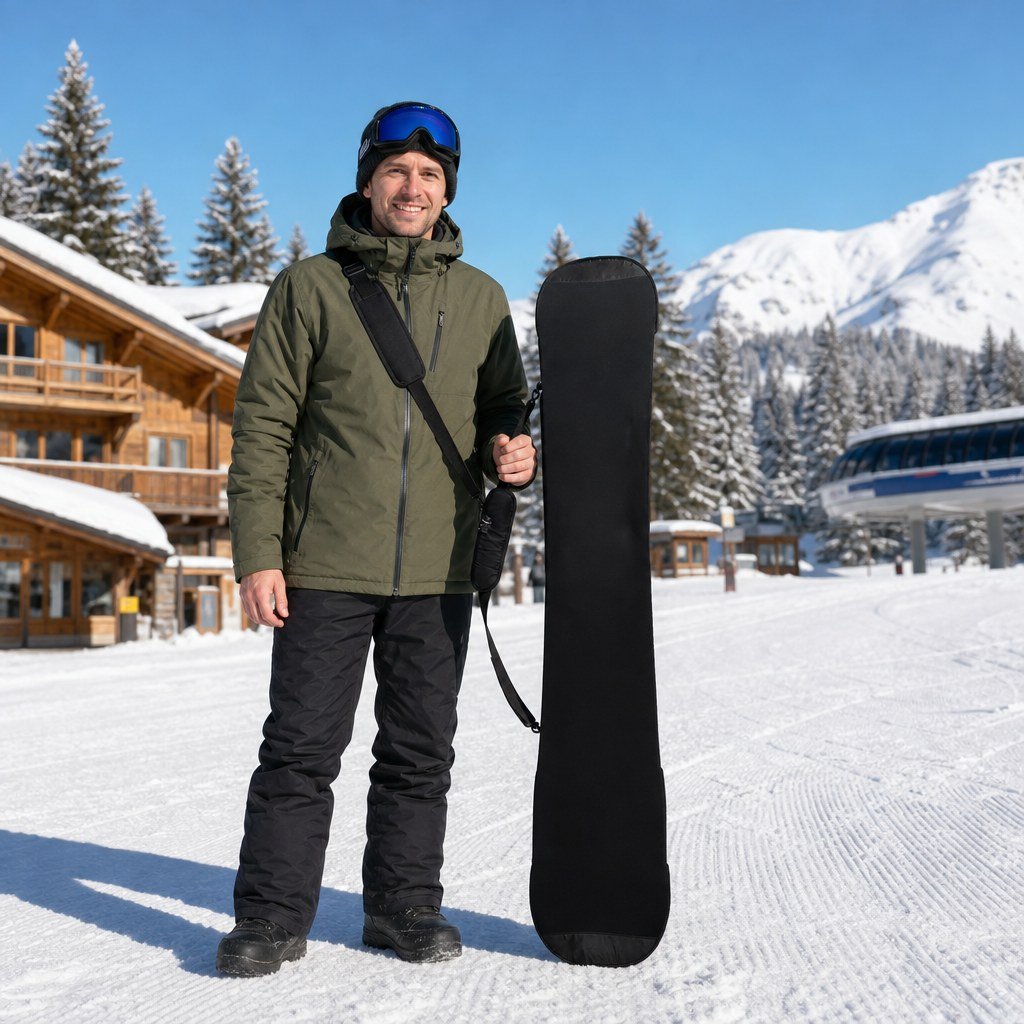
Factory-direct supply before the first race weekend
We manufacture these accessories in our own Shenzhen facility with 16+ years of hook-and-loop and neoprene production, supplying OEM and ODM programmes for snowsports, running, hiking and cycling brands. For a Q4 or early-2027 programme: low MOQ on first orders and colour tests, custom sizing and webbing width, logo embossing, retail-ready packaging, REACH and RoHS compliant materials with test reports, and a quote within 24 hours of a clear spec.
Where buyers need documentation for their own compliance files, we can arrange BSCI audit / ISO 9001 recertification on request — stated plainly rather than claimed as a certificate. Sampling usually starts from a spec sheet plus a target landed cost; send both and we return a costed option.
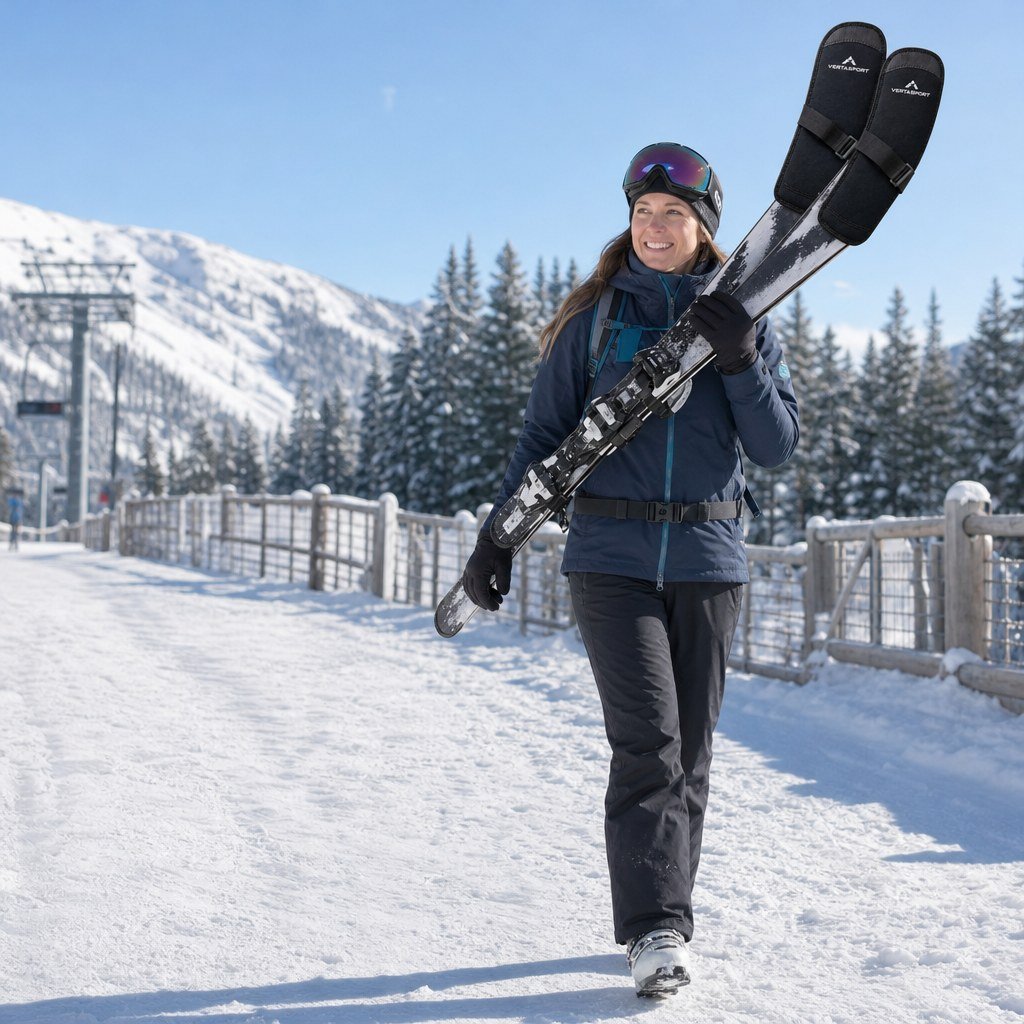
Next step
The season starts on the Rettenbach Glacier on 24 October, and the comfortable production window before ISPO Amsterdam closes soon after. If your winter 2027 range still needs ski carrier straps, neoprene covers or padded travel bags, send the spec to hxwdavidli@gmail.com or message us on WhatsApp for a factory-direct quote within 24 hours.