Snow Guns Fire Up in Summit County: What Pre-Season Resort Readiness Means for Accessory Stocking
Snowmaking crews in Colorado’s Summit County switched the guns back on overnight on 14 October 2026, and with them the North American pre-season officially started. For resorts this is an operational milestone. For the brands, distributors and resort retail programmes that supply the straps, covers, pouches and hydration hardware skiers actually carry, it is the last clear signal before the winter buying window closes.
Snow Guns On at Keystone and Arapahoe Basin
The Denver Post reported on 15 October 2026 that Keystone Resort and Arapahoe Basin, both in Summit County, began snowmaking operations overnight on Wednesday, 14 October, as storms dusted the mountaintops. Arapahoe Basin president and chief operating officer Alan Henceroth wrote on the resort’s blog that temperatures dropped to 23 degrees, allowing snowmaking on the upper two-thirds of the High Noon run.
The operational detail is worth reading closely, because it explains why resort readiness is never a one-day event. According to the resort release cited by The Denver Post, Keystone operates 1,000 hydrant locations around the mountain, including 39 mobile fan guns, 30 tower fan guns, three arm-mounted fan guns, 500 manual and automatic air/water tower guns and 55 air/water ground guns. Keystone’s senior director of mountain operations, Kate Schifani, called the start of snowmaking one of the most exciting milestones of the year.
Summit Daily reported on 14 October 2026 that Keystone was already selling lift tickets online for Saturday, 24 October, while stressing that no official opening date had been set and that the timeline was simply as soon as possible. Arapahoe Basin, with a base elevation of 10,780 feet, expects roughly a week of good snowmaking before it can open, according to communications manager Shayna Silverman. The paper also noted that crews watch wet-bulb temperature, a combined measure of ambient temperature and humidity, and look for something around 26 degrees Fahrenheit.
Loveland Ski Area was equally precise: the resort began snowmaking at 7:04 p.m. on Wednesday, 14 October and is targeting an opening between late October and early November, weather and conditions permitting, according to its own announcement dated 15 October 2026.
Pre-Season Dates Were Fixed Months Ago
Resort calendars are published long before the first gun fires. Vail Resorts’ announcement of 18 August 2026 listed Keystone as opening as soon as possible in October, Breckenridge on 6 November and Vail Mountain on 13 November. Further west, The Sacramento Bee reported on 12 October 2026 that Mt. Rose Ski Tahoe had started snowmaking and plans to open on 6 November, conditions permitting.
That sequencing matters to suppliers. The purchase order behind a season that opens in early November is placed in late summer and early autumn, not in December. By the time the snow guns run, retailers are not starting their buy, they are filling the gaps in it.
Why Last Winter Changes This One
Summit Daily noted on 14 October 2026 that the previous winter was marked by record-low snowpack across much of the West and the lowest ski visitation in more than 35 years in Colorado. Retailers who carried heavy seasonal inventory through a poor snow year tend to buy later and tighter the next season, and to favour accessories that sell through on their own rather than only as an add-on to a big-ticket purchase such as a board, a boot or a pass. Deep colour ranges and narrow size runs replace broad speculative assortments.
Snow Control, Storage and Carry: the Opening-Week List
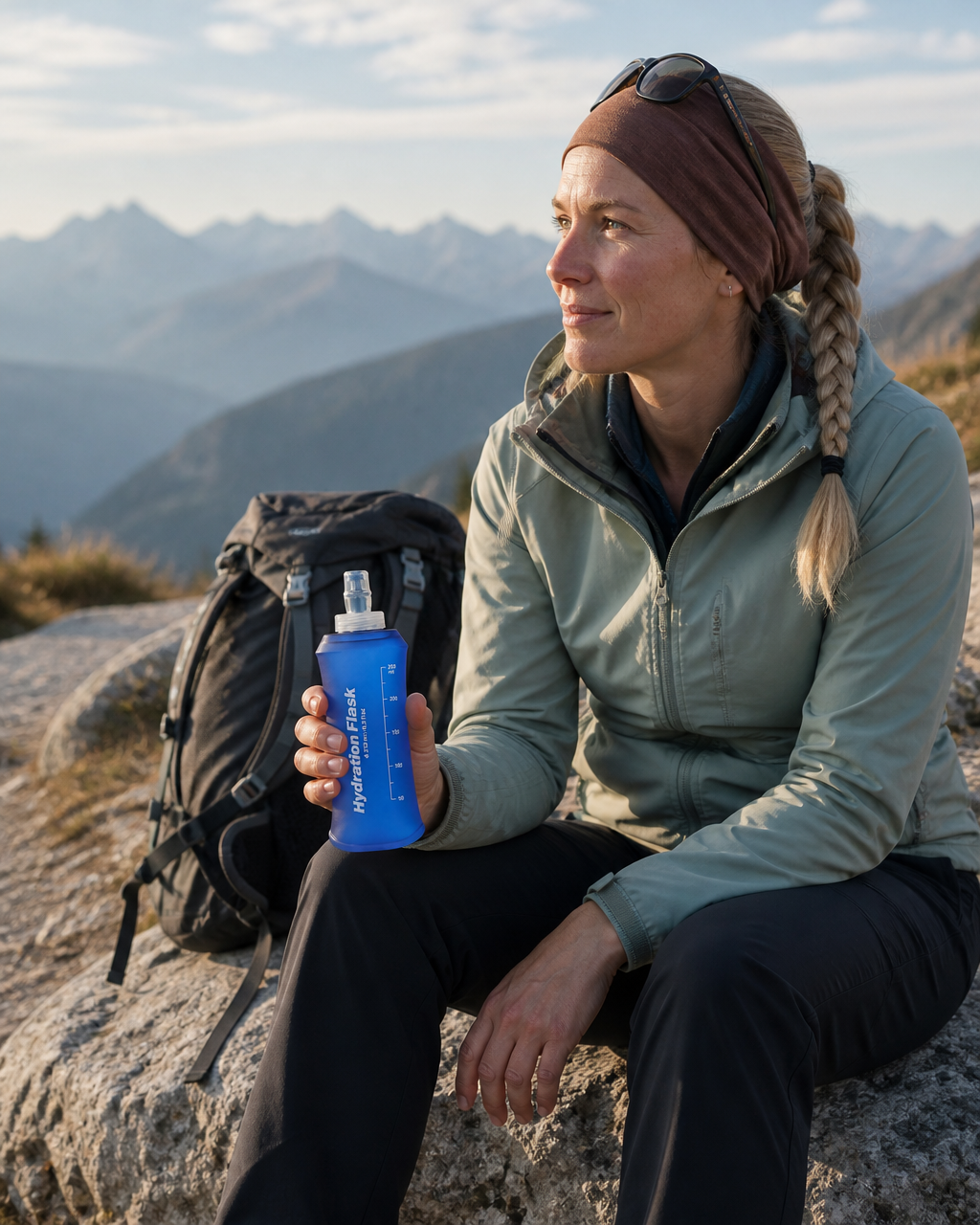
Opening week produces a predictable burst of accessory demand at resort shops, rental desks and online stores: board and ski covers for transport and off-season storage, hook and loop straps for bundling poles and boards, leashes, goggle and glove retainers, and hydration hardware for the warm-up weekends when lifts run but the alpine air is dry. Our elite snowsports range was built around that list rather than around the hardware.
Two specification questions come up in almost every pre-season enquiry. The first is cold-weather closure performance: hook and loop systems that still hold on wet nylon, at low temperature, and with a gloved hand doing the pulling. The second is material documentation. REACH and RoHS declarations for the textile, foam and TPU components inside covers, pouches and flasks are now a routine request from European and North American buyers, and they are easier to supply when the factory owns the specification from the start.
Factory-Direct OEM/ODM for a Short Buying Window
Vertasport is an OEM/ODM manufacturer of hook and loop straps, snowsports covers, pouches and TPU soft flasks, supplying brands, distributors and resort retail programmes directly from the factory. Low MOQ runs allow a buyer to test a colourway or a single size on a narrow assortment before committing, and custom logo, label, packaging and Pantone matching are handled in-house. We can arrange BSCI audit / ISO 9001 recertification on request, and we issue REACH and RoHS documentation alongside the material specification. Where a programme needs a specific strap geometry, we tool and sample against the drawing rather than offering the closest catalogue item; the adjustable ski straps with hook and loop fasteners page shows the current build options.
Next Step for Pre-Season Stocking
If your 2026/27 assortment still has open slots, send the specification, target quantity and destination market. Our team replies to quotation requests within 24 hours: email hxwdavidli@gmail.com or message us on WhatsApp at wa.me/8613480143331.
Sölden Clears FIS Snow Control as the 2026/27 World Cup Opens October 24: The Final Q4 Sourcing Window for Ski Straps and Snow Gear
Sölden, Austria — 19 October 2026. The 2026/27 alpine season has a confirmed starting gun. On Thursday 15 October, FIS officials completed the snow control on the Rettenbach Glacier and cleared the Audi FIS Ski World Cup opener for 24–25 October, as reported by SnowBrains and confirmed by the Sölden event programme. For brands and private-label buyers, that green light matters beyond race day: European retail has stopped asking whether the season starts on time and started asking what must be on shelf before the first powder weekend.
Sölden clears snow control: two giant slaloms confirmed
The opening weekend keeps its traditional shape. The women’s giant slalom runs on Saturday 24 October, the men’s race follows on Sunday 25 October, and both are two-run formats with the first run at 10:00 local time and the second at 13:00. The Rettenbach course is one of the more demanding early-season tests on the calendar, with gradients reaching 68 percent and a vertical drop of roughly 370 metres.
The start list brings the usual headlines: Marco Odermatt and Lucas Pinheiro Braathen on the men’s side, Austria’s Julia Scheib defending her Sölden win, and Mikaela Shiffrin expected to start, subject to the final list. Italy is without Sofia Goggia and Federica Brignone, both still recovering, while Marta Bassino returns after a season out.
Commercially, the timing matters more than the names. A passed snow control two weeks out tells the trade that the glacier circuit is functioning and that the first consumer-facing ski content of the winter lands on 24 October. Retail marketing calendars, rental fleets and demo programmes all key off that date.
Austria now leads the open-resort count
The wider picture is improving after a record-warm Alpine summer. J2Ski’s 15 October snow report counted eight Alpine areas open and noted that Austria has overtaken Chile and New Zealand for the most areas running, with five glaciers operating: Pitztal, Hintertux, Sölden, Stubai and Kitzsteinhorn. Sölden offers the most terrain at around 18 km, and the report recorded up to 20 cm of new snow above 1,600 m and 30 cm above 3,000 m — the lowest snowline of the autumn so far.
Not every opening has gone to plan. SnowStash’s mid-October guide notes that Titlis pushed its glacier opening back two weeks to 24 October, that Zermatt restarted only a handful of high-altitude lifts on 14 October after more than two months closed, the full resort due on 1 November, and that Finland’s Levi and Ruka are running on stored snow-farmed reserves with roughly 2.5 km each. The same guide cites GLAMOS data showing a 5.5 percent loss of Swiss glacier ice volume in 2025-26, the second-largest on record.
Thin early-season bases have a direct product consequence. When snow is marginal, resorts and rental operators lean harder on protection: tip and tail covers, padded sleeves and carrier straps that keep demo skis intact between transfers. Durability moves up the buying criteria list, and consumables that fail in week one become a warranty conversation.
A compressed trade calendar leaves little slack
The commercial calendar is tighter than usual. ISPO 2026 moves to Amsterdam from 3–5 November with more than 850 exhibitors confirmed, over 25,000 trade visitors expected and retailers including INTERSPORT, Ellis Brigham, JD Outdoor, Mountain Warehouse and Amazon engaged. In Munich, The Outdoor Industry Compass called this month’s Performance Days a record-breaking edition, with natural materials still gaining share in performance textiles.
The arithmetic is simple: the World Cup opener is 24 October, ISPO opens 10 days later, and most European buy plans for the winter 2027 assortment are shaped in that window. An accessory programme without a confirmed production slot before the shows tends to land on a later, more expensive schedule.
What buyers are reordering for the glacier season
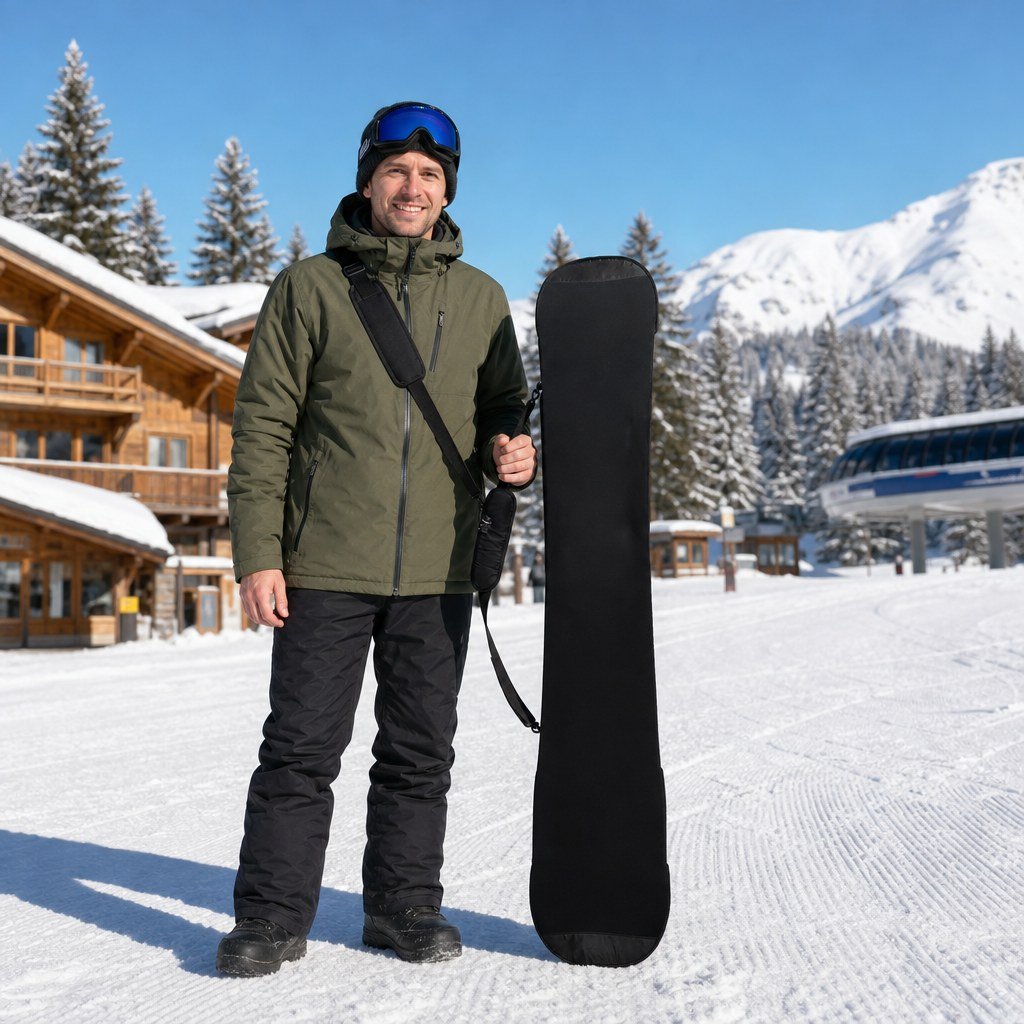
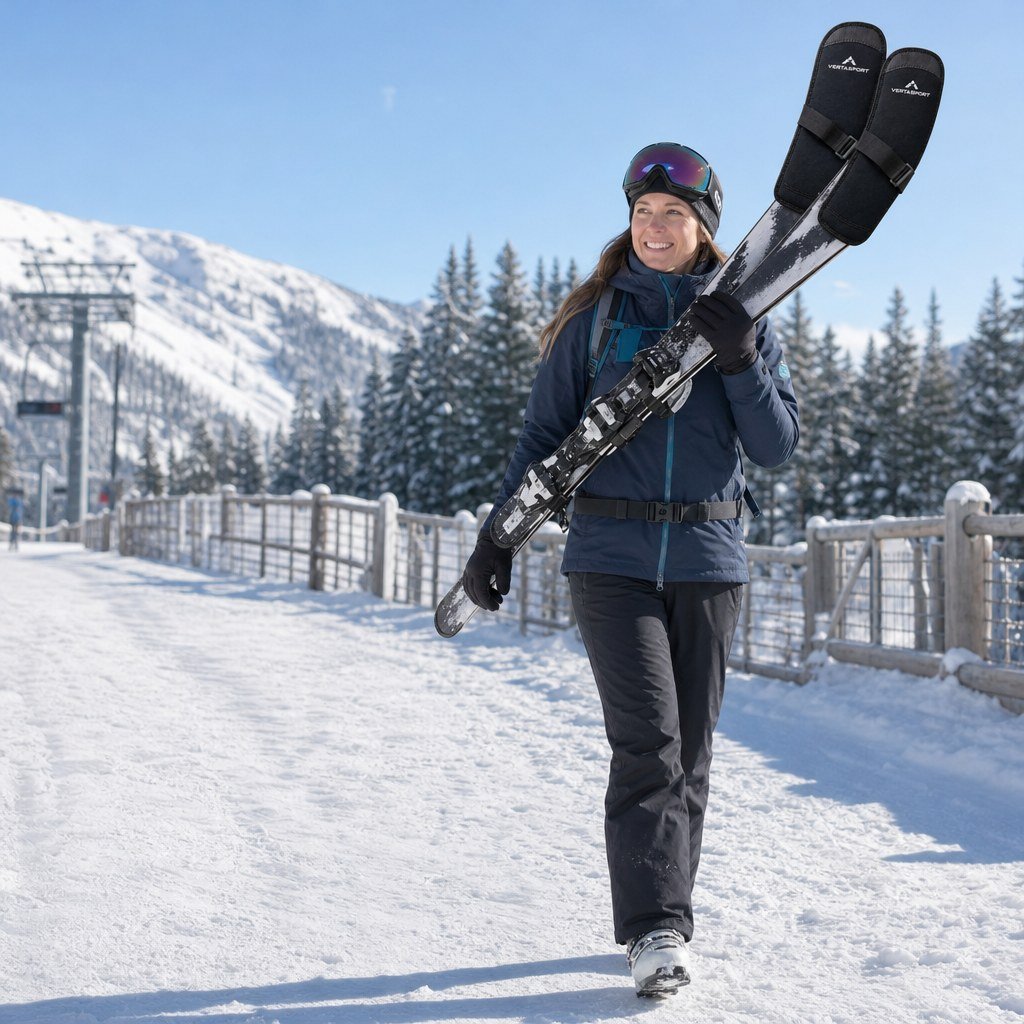
The strongest reorder demand sits in the components that travel with the skis rather than on them. Adjustable hook-and-loop ski carrier straps remain the volume driver: two skis, one hand, no rattle on the gondola. Neoprene tip and tail protectors and padded snowboard sleeves with shoulder straps follow, driven by rental fleets and by travellers who check a bag once a year and expect it to survive.
Browse the full elite snowsports range and the equipment straps category for the current SKUs. The same hook-and-loop platform carries over into trail running and pickleball accessories, which lets distributors consolidate a single supplier across categories instead of managing four.
Factory-direct supply before the first race weekend
We manufacture these accessories in our own Shenzhen facility with 16+ years of hook-and-loop and neoprene production, supplying OEM and ODM programmes for snowsports, running, hiking and cycling brands. For a Q4 or early-2027 programme: low MOQ on first orders and colour tests, custom sizing and webbing width, logo embossing, retail-ready packaging, REACH and RoHS compliant materials with test reports, and a quote within 24 hours of a clear spec.
Where buyers need documentation for their own compliance files, we can arrange BSCI audit / ISO 9001 recertification on request — stated plainly rather than claimed as a certificate. Sampling usually starts from a spec sheet plus a target landed cost; send both and we return a costed option.
Next step
The season starts on the Rettenbach Glacier on 24 October, and the comfortable production window before ISPO Amsterdam closes soon after. If your winter 2027 range still needs ski carrier straps, neoprene covers or padded travel bags, send the spec to hxwdavidli@gmail.com or message us on WhatsApp for a factory-direct quote within 24 hours.
First Big Storm of 2026/27 Hits Utah and Colorado as Snowmaking Fires Up: The Late-October Reorder Window for Ski Straps and Winter Gear
Mid-October delivered the moment the winter sports industry waits for: the first storm of the 2026/27 season that actually stuck. According to Teton Gravity Research (15 October 2026), the system that moved through Utah brought roughly 8–10 inches to Alta and Snowbird by the afternoon of Tuesday 13 October, before Colorado took the next round. For brands and distributors the significance is less about weather than about the calendar — the late-October reorder window for ski straps, covers and winter accessories is now open.
Utah: The Cottonwood Canyons Come Through First
The Wasatch Range was the early winner. Alta and Snowbird recorded roughly 8–10 inches by 13 October, with potentially more in the upper mountains, following unsettled weather linked to the remnants of Tropical Storm Rachel and a colder system out of the Pacific Northwest.
The same storm showed how localised early-season snowfall is: while the Cottonwood Canyons picked up meaningful snow, Park City Mountain and Deer Valley received very little, and resorts around Utah’s Ogden Valley and Logan saw minimal accumulation.
Opening dates remain tied to snowmaking temperatures and trail coverage rather than to one storm. Brian Head has announced a 6 November target, while Alta, Park City Mountain and Solitude have listed 20 November. Eagle Point will stay closed for the whole season because of Cottonwood Fire damage.
Colorado: The Snow Guns Switch On
Colorado saw its first notable snow of the season early in the week — Vail reporting nearly 3 inches, Beaver Creek a little over an inch and Crested Butte a dusting — before OpenSnow’s 14 October forecast called for roughly 6–12 inches at many resorts.
The more consequential news is mechanical. Loveland Ski Area began snowmaking at 7:04 p.m. on Wednesday 14 October, as reported by KOAA News5, building toward a top-to-bottom run and an approximately 18-inch packed base. Its system covers more than 240 acres, and the resort targets late October or early November after opening on 8 November last season. Arapahoe Basin, at a 10,780-foot base elevation, reported its first top-to-bottom snow this week; communications manager Shayna Silverman told Summit Daily (14 October 2026) that the aim is to open as soon as possible.
Snowmaking hinges on wet-bulb temperature — roughly 26 °F, combining ambient temperature and humidity. That is why, as Keystone Resort‘s Jacob Marquardt explained, heavy early storms are not automatically ideal: falling snow means high humidity, and damper conditions are harder for crews on the hill. Keystone was already selling lift tickets for Saturday 24 October; last season it opened on 25 October and beat A-Basin by a day to become the first resort in Colorado and North America to open.
Tahoe, Jackson Hole and the Rest of the West
In Tahoe, Mt. Rose Ski Tahoe has set a 6 November target and began making snow on 13 October, saying opening depends on reaching 10–14 inches of average snow depth on a key intermediate trail. Most other Tahoe resorts target openings closer to Thanksgiving.
In Wyoming, Jackson Hole Mountain Resort is working toward 27 November after the storm whitened its upper mountain while lower elevations saw mostly rain. Two numbers frame the season against last winter: record-low snowpack across much of the West, and Colorado’s lowest ski visitation in more than 35 years. Retailers planned lean in response, which is why an early, snowmaking-driven opening sequence tends to pull demand forward rather than spread it out.
El Niño: A Planning Signal, Not a Guarantee
The early snowfall arrives as a strong El Niño develops in the tropical Pacific. NOAA’s 8 October update said El Niño continued to strengthen, with a strong-to-very-strong event likely through January–March 2027. El Niño can shift the odds of precipitation across North America, but effects vary by region and moisture alone does not decide how much falls as snow. For buyers, the practical read is to keep orders flexible and split across the season.
What It Means for Accessory Buyers
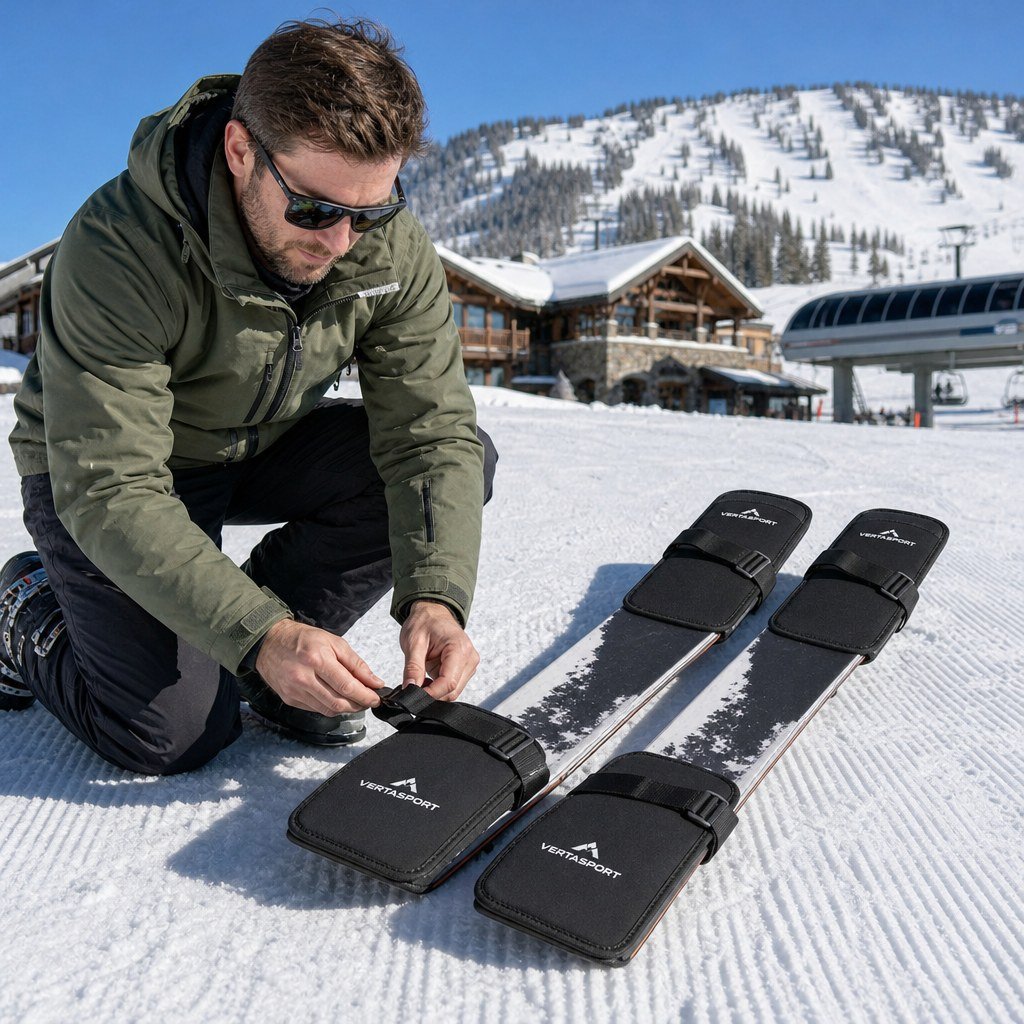
Accessory demand tracks participation and travel, not ski-unit sales. When resorts open early and rental fleets stage gear in October, the items that move protect and carry the hardware: hook-and-loop ski and snowboard carrier straps, alpine ski ties, padded sleeves, foldable travel bags, tip protectors and neoprene covers. Goods ordered now can still be landed before the December peak in most European and North American channels; November orders start competing with peak-season freight.
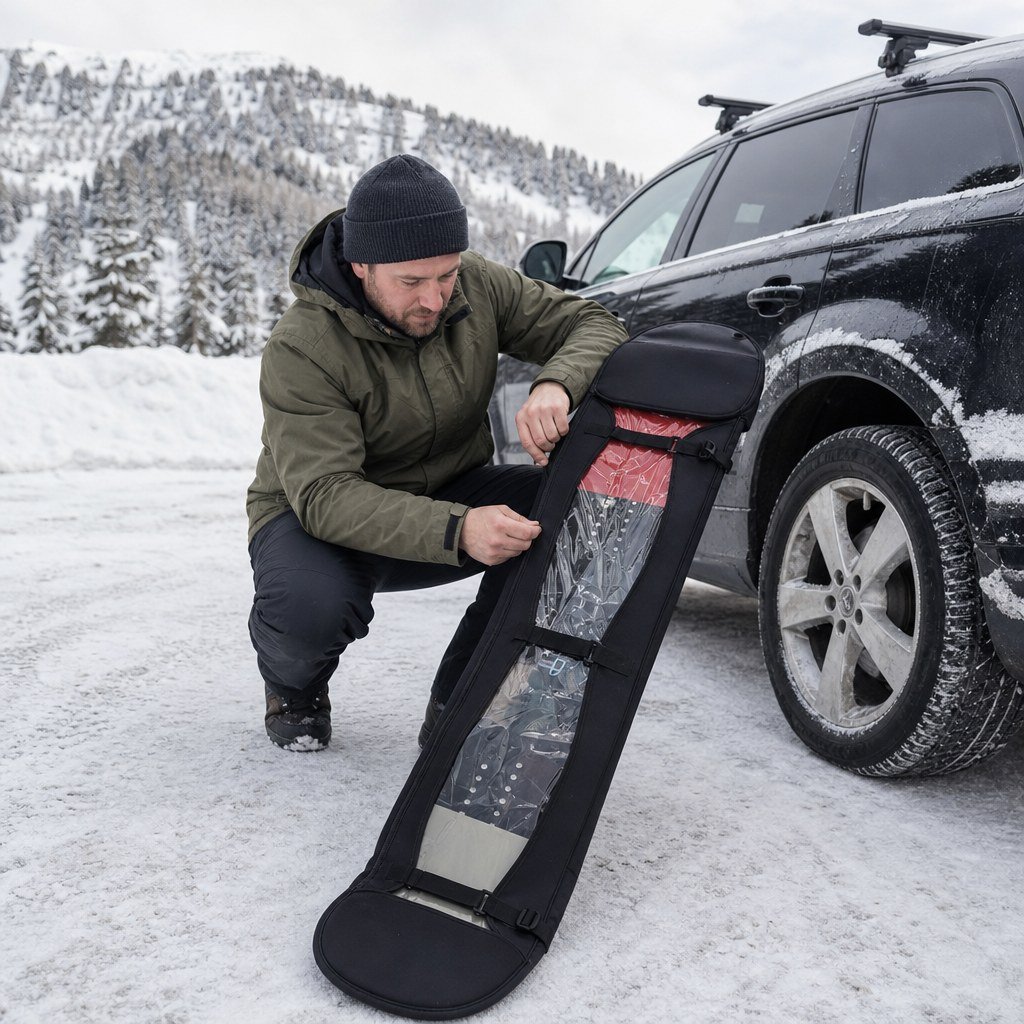
Factory-Direct Ski Straps and Winter Accessories
VERTASPORT manufactures that range in-house in Shenzhen: hook-and-loop ski straps and ski carrier straps from our equipment straps line, snowsports covers, sleeves and bags from our clear-window snowboard cover through to ski tip protectors, with the same construction applied across our trail running, running, hiking, cycling and pickleball lines.
We are a 16+ year hook-and-loop and neoprene manufacturer supplying importers and private-label brands with factory-direct OEM/ODM, custom logo, colour and size runs, low MOQs for trial orders, REACH & RoHS compliant materials as standard, and quotes within 24 hours. We can arrange BSCI audit / ISO 9001 recertification on request.
Talk to Us Before the Calendar Tightens
Send your spec sheet, target quantity and destination market, and we will come back with pricing, tooling options and a delivery schedule that fits your December window. Email hxwdavidli@gmail.com or message us on WhatsApp.
Rental Fleets and Preseason Retail: Where Snowboard Covers and Ski Straps Fit the 2026-27 Stock-Up
The second half of October is when the snowsports trade stops talking about the coming season and starts servicing it. Retailers reset walls and book fitting appointments, rental desks assemble and label fleets, and the first European glacier areas have already been running for a fortnight. For accessory suppliers, this is the fortnight when a good season and a chaotic one separate, not by the hardgoods on the shop floor but by whether the covers, straps and protectors arrived in the right specification.
Rental Is No Longer the Entry Level of the Business
Ski Area Management’s 2026-27 rental gear review, published in its January 2026 issue under Rick Kahl’s byline, opened with an observation that reframes how accessory buyers think about volume. Citing Snowsports Industries America figures, it described the United States gear market as splitting roughly into 30 percent rental, 20 percent lease or demo, 30 percent specialty retail and 20 percent online. Rental and demo are no longer a side channel; the review also noted a clear consumer drift toward leasing and demo rental and away from outright purchase.
The same review captured the operational consequence through the people who sell into it. Fischer’s vice president of sales, Scott Ford, described how demo has expanded beyond its old limits and is now effectively another tier of rental. Salomon’s winter sports equipment vice president, Erik Anderson, explained the other side of the table: rental partners appreciate two- to three-year carryover cycles because it keeps fleet management from becoming chaotic. More equipment, in circulation for longer, passing through more hands.
What Fleet Buyers Actually Standardise
Vail Resorts’ announcement of 16 March 2026 illustrates where rental operations are heading. The company set out plans to fold the best features of its My Epic Gear programme into traditional gear rentals, so that guests renting demo skis or snowboards could select their model online across 12 resorts, and to extend premium technologies such as BOA boot closures into the rental pool.
The direction is clear: rental equipment is presented with retail-grade expectations, while the equipment itself still has to survive an unusually hard life. Every item is handled by staff who did not buy it and guests who did not pack it, moved by van and cargo box, and stored in whatever space the shop can spare between Saturday and Wednesday.
The Retail Side Books Differently
Retail buyers work to a different rhythm. The pre-season conversation in a specialty shop is about the customer’s existing setup as much as the new one: bases, edges, bindings, boots and helmets all get inspected before the first day on snow, which is exactly the checklist Christie Sports laid out in its 2026-27 winter gear guide published on 15 October 2026. That service conversation creates an accessory sale almost automatically, because a customer who has just paid to have edges tuned is receptive to keeping them intact on the drive home.
Where Covers and Straps Enter the Checklist
This is the practical overlap between the two channels. A rental fleet needs protection that is uniform, replaceable and cheap enough to treat as a consumable. A retail floor needs protection that looks like part of the product, with a visible window so a customer can see the board and a carry handle that survives a season. Both need the same underlying construction: a neoprene shell that stays supple below freezing, a lining that will not abrade a base, and hook-and-loop closures sized for gloved hands.
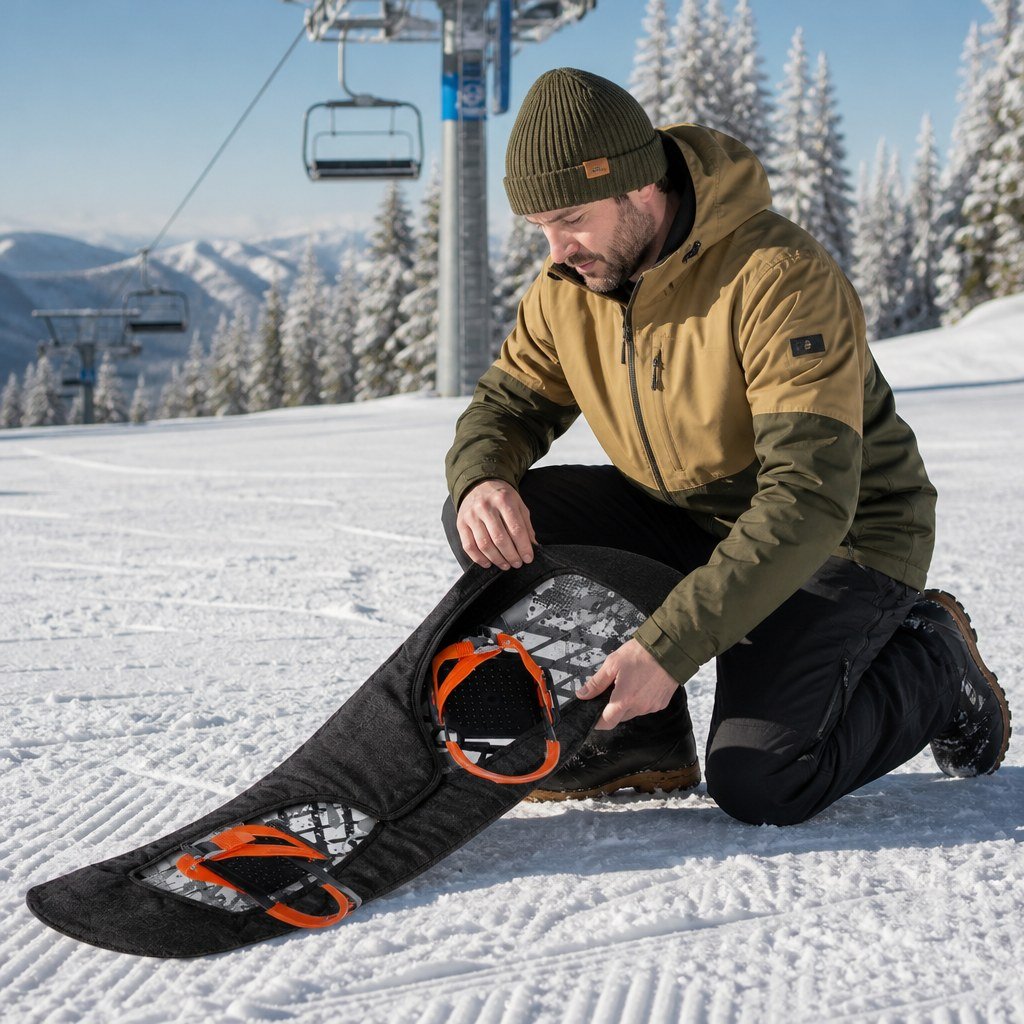
Treat Accessories as a Fleet Consumable
Fleet managers who plan accessories properly converge on a handful of habits. They standardise on one or two lengths rather than a full size ladder, so a replacement can be pulled from the same bin in February as in November. They specify the closure hardware explicitly, because a hook-and-loop tab that fails in the cold is a warranty conversation, not a spare part. And they ask for print that survives washing, salt and UV rather than flaking off by mid-season.
Retail buyers add a fourth habit: they consolidate. A shop already sourcing equipment straps for bike and outdoor categories, and high hiking accessories for the shoulder seasons, gains little from a different supplier for snowboard covers. One specification language across categories means one sampling round, one compliance file and one reorder conversation. Our elite snowsports line is organised that way, and the adjustable ski straps with hook-and-loop fasteners are built as a single SKU spanning junior rental skis through wide all-mountain pairs.
Build the Spec Now, Not in December
Every year the same pattern repeats: the covers that were a line item in September become urgent in December, and by then the only decision left is which specification is close enough. Starting the conversation while fleets are still being assembled keeps that choice in the buyer’s hands, and keeps changes such as a longer body, a scan window or a co-branded print inside the sample stage.
We are a factory-direct OEM/ODM manufacturer of neoprene and webbing straps, covers and protectors, with low MOQ programmes for trial orders and repeat runs, REACH and RoHS material compliance, and we can arrange BSCI audit / ISO 9001 recertification on request. Send your specification or a reference sample and we will reply with a quotation within 24 hours: hxwdavidli@gmail.com or WhatsApp.
Europe’s 2026/27 Ski Season Opens as the Nordic Market Heads to $464M: The Mid-October Ordering Window for Ski Straps and Winter Gear
Mid-October is where the European ski season stops being a forecast and starts being a lift line. According to SnowBrains (26 September 2026) and the Swiss season tracker deinskigebiet.ch, several resorts across the Alps and Scandinavia have already opened, and a second wave spins its lifts between 17 and 31 October. For brands and distributors, that window is also the last clean moment to lock in the straps, sleeves and covers that travel with every pair of skis.
Where Lifts Are Already Turning
Finland’s Levi and Ruka opened on 2 October, using snow farming — snow stockpiled under insulating covers through the summer — to guarantee an early front-slope opening regardless of natural snowfall. On the same day, Austria’s Hintertux Glacier reopened after its annual summer shutdown, which now runs roughly five to six weeks each year.
Switzerland’s Saas-Fee followed on 3 October, reopening its upper glacier after an August heat closure that had suspended summer skiing. Stubai Glacier and Kitzsteinhorn above Zell am See-Kaprun opened on 9 and 10 October. The next wave is already scheduled: Diavolezza-Lagalb in the Engadin and Kåbdalis in Swedish Lapland around 17 October, Mölltal Glacier on 23 October, Breuil-Cervinia on 24 October and Schilthorn on 31 October, with Zermatt’s full winter season from 1 November. Early-season dates are provisional.
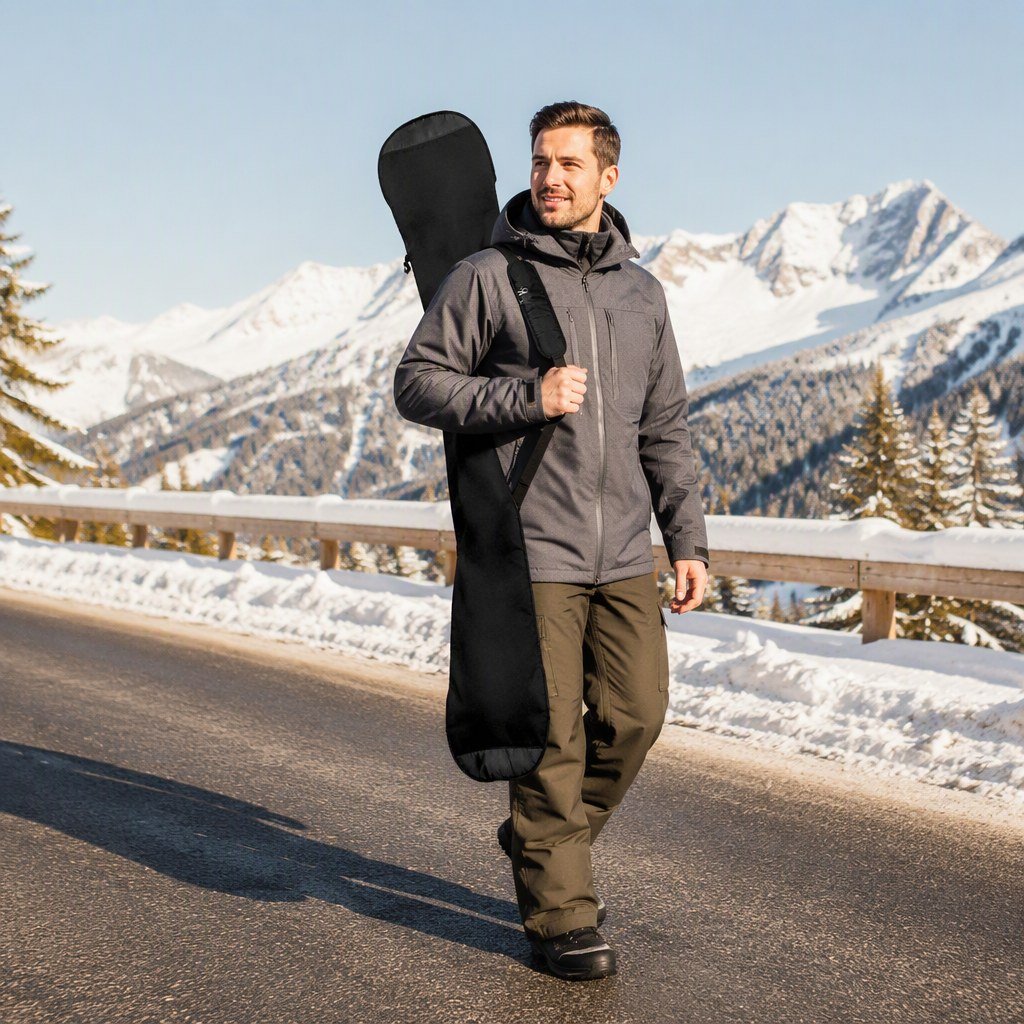
Why Early-October Openings Matter More Than They Look
What actually decides an announced opening is cold, not snowfall. As deinskigebiet.ch notes in its 2026/27 analysis, most resorts open on machine-made snow and need several consecutive nights below roughly minus 3 °C wet-bulb temperature, so a mild November moves more dates than a dry one. The resorts that reliably open before mid-November have one thing in common — glacier ice supporting the snowpack from below.
Terrain in these first weeks is limited to glacier lifts and snow-farmed slopes, but the openings set the tone for the winter: rental fleets begin staging gear and buyers who have not yet placed winter orders are working against a shrinking calendar.
The Other Story: Nordic Equipment Resets While Participation Grows
On 6 October 2026, Growth Market Reports published a global cross-country ski equipment outlook that values the market at USD 310 million in 2025 and projects USD 464 million by 2034, a 4.6% compound annual growth rate. The headline number sits next to a structural shake-up: Norway’s Madshus was sold on 3 August 2026 to ConsilTech, the owner of Kästle, and on 14 September 2026 the Madshus board proposed ending ski production at Biri in Norway from 2027 and moving it to ConsilTech’s plant in Nové Mêsto, Czech Republic — a proposal affecting 32 jobs, after losses of close to NOK 200 million over three and a half years. The top five suppliers now hold roughly 55% of market revenue, with ConsilTech controlling two Nordic brands alongside Fischer, Amer Sports and Rossignol.
The important part for suppliers is why the market shrank. It is an inventory problem, not a skier problem. Eurostat customs data cited in the report shows EU imports of cross-country skis falling from 1.31 million pairs in 2023 to 575,000 pairs in 2025, as retailers sold down stock bought during the 2020–2022 boom through two late, snow-poor winters. Meanwhile, Snowsports Industries America counted 5.8 million US cross-country participants in 2024/25, up from 4.8 million in 2019/20, and Vasaloppet’s 2026 Winter Week drew 61,600 registrations. Europe still holds 76.0% of the market, while Asia Pacific is the fastest-growing region at a 7.4% CAGR. The report projects a modest recovery in 2026 and faster growth from 2027, as boom-era equipment comes up for replacement.
What It Means for Straps, Covers and Accessory Buyers
Accessory demand tracks participation, not ski-unit sales — which is why the figures above matter more to a strap supplier than the shipment decline does. As rental fleets and retail inventories refresh from 2027, demand follows for the items that protect and carry the hardware: carrier straps, padded sleeves, foldable travel bags, tip protectors and neoprene covers.
That is exactly the range VERTASPORT manufactures in-house: hook-and-loop ski and snowboard carrier straps from our equipment straps line, plus snowsports covers and bags, and the same construction applied across trail running, running, hiking, cycling and pickleball lines.
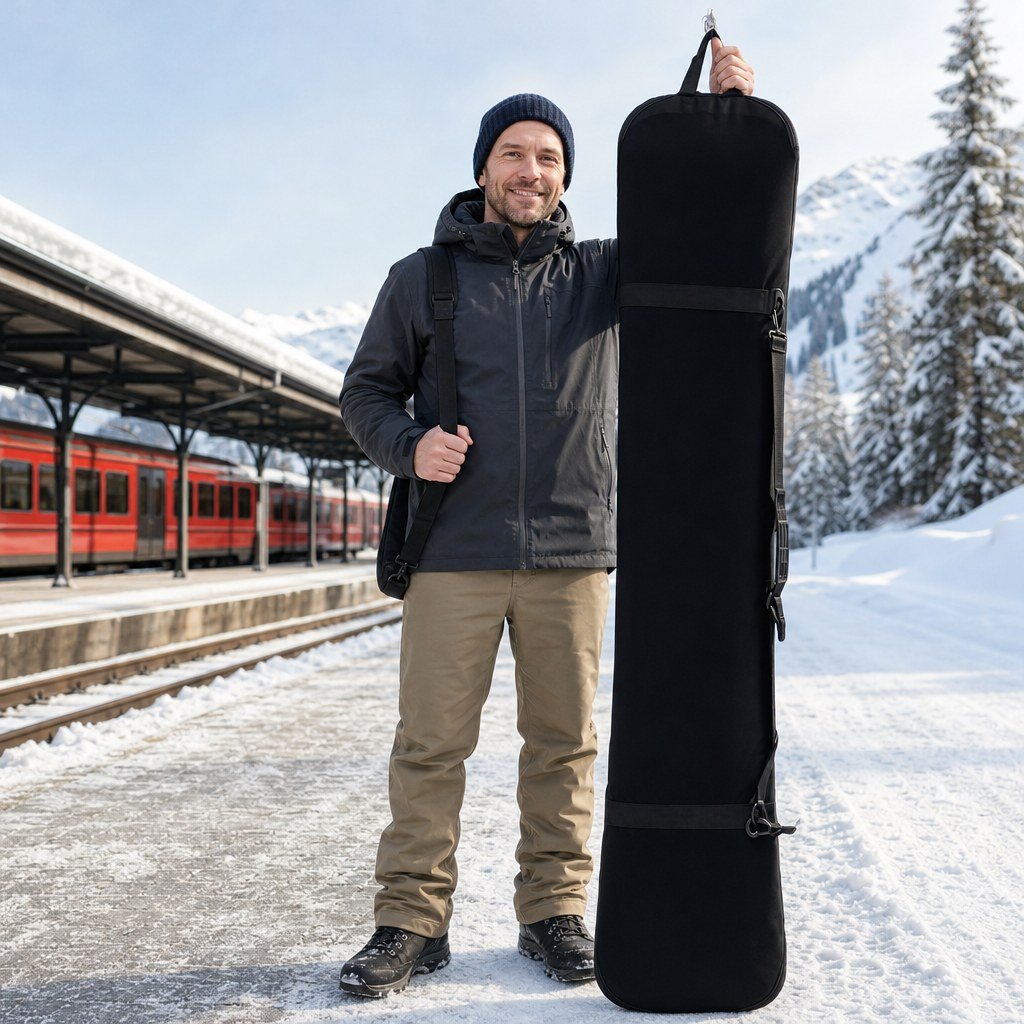
The Mid-October Ordering Window
Goods ordered in the second half of October can still be produced and landed before the December peak in most European and North American channels; November orders start competing with peak-season freight. Buyers evaluating winter accessory programmes now should expect: factory-direct OEM/ODM with custom logo, colour and size runs; low minimum order quantities for trial orders; REACH & RoHS compliant materials as standard; and quotes returned within 24 hours.
We are a 16+ year hook-and-loop and neoprene manufacturer based in Shenzhen, supplying ski straps, snowboard sleeves, travel bags, tip protectors and multi-sport strap systems to importers and private-label brands. We can arrange BSCI audit / ISO 9001 recertification on request for buyers whose compliance teams require it.
Talk to Us Before the Season Fills In
Send your spec sheet, target quantity and destination market, and we will come back with pricing, tooling options and a delivery schedule that fits your December window. Email hxwdavidli@gmail.com or message us on WhatsApp.
Glacier Season Live and Snowmaking Underway: The Mid-October Ordering Window for Ski Straps and Winter Gear
The 2026/27 winter season has stopped being a forecast and started being a delivery schedule. Europe’s high-altitude glaciers are already spinning, Colorado’s snowmakers are testing their systems, and the resorts that anchor early-season demand have dates on the calendar. For retailers and brands still finalising their winter buy, the middle two weeks of October are the last comfortable window to place ski strap, ski bag and neoprene protector orders that still land before the consumer rush.
Europe’s Glacier Season Is Already Spinning
According to 2026/27 opening schedules compiled by the Austrian ski specialist Snowscape and published on 30 September 2026, the Hintertux Glacier was scheduled to operate from 2 October 2026, the Stubai Glacier from 9 October 2026, and the Kitzsteinhorn Glacier in Kaprun from 10 October 2026 — all subject to snow and weather conditions.
Those three glaciers are effectively the shop window for the European winter. As Snowscape notes, glacier terrain is where early-season skiers go first, and the rest of the market follows from late November: Kitzbühel plans to start at Resterkogel on 6 November 2026, Ischgl on 26 November, and the Skicircus Saalbach-Hinterglemm-Leogang-Fieberbrunn on 27 November, with St. Anton am Arlberg, Mayrhofen and Zell am See-Schmittenhöhe following in early December.
Colorado’s Snowmaking Window Is Opening
In North America, the race is already on. Powder magazine’s 28 September 2026 round-up reported that Loveland Ski Area was preparing to begin snowmaking as early as 1 October, and quoted Arapahoe Basin COO Al Henceroth’s 26 September blog post: “We have clearly shifted to Fall… We have not quite seen snowmaking temperatures yet, but we are getting closer.”
Colorado Public Radio’s opening-dates round-up, published 2 October 2026, lists Arapahoe Basin at a projected 9 October opening — a prediction from OnTheSnow rather than an official resort announcement — with Keystone and Winter Park projected for late October, Breckenridge and Copper Mountain on 6 November, and Vail on 13 November. CPR followed up on 12 October noting that cooler, potentially snowier weather may finally be arriving after a record-warm fall.
Why Mid-October Decides the Winter
Between the glacier openings and the late-October resort wave sits a short, high-value window. Retailers who wait until lifts are running buy air freight and accept broken size curves. Retailers who commit in mid-October move by sea, at ocean lead times that put stock on shelves for the late-November and December peaks — the period that now carries the heaviest promotional weight in European and North American winter retail.
That is why the ordering conversations we are having this month are unusually specific. Buyers are no longer asking what a ski strap costs; they are asking what a ski strap costs at a given tensile rating, with a given logo position, packed a given way, and shipped by a given date.
What Buyers Are Locking In Now
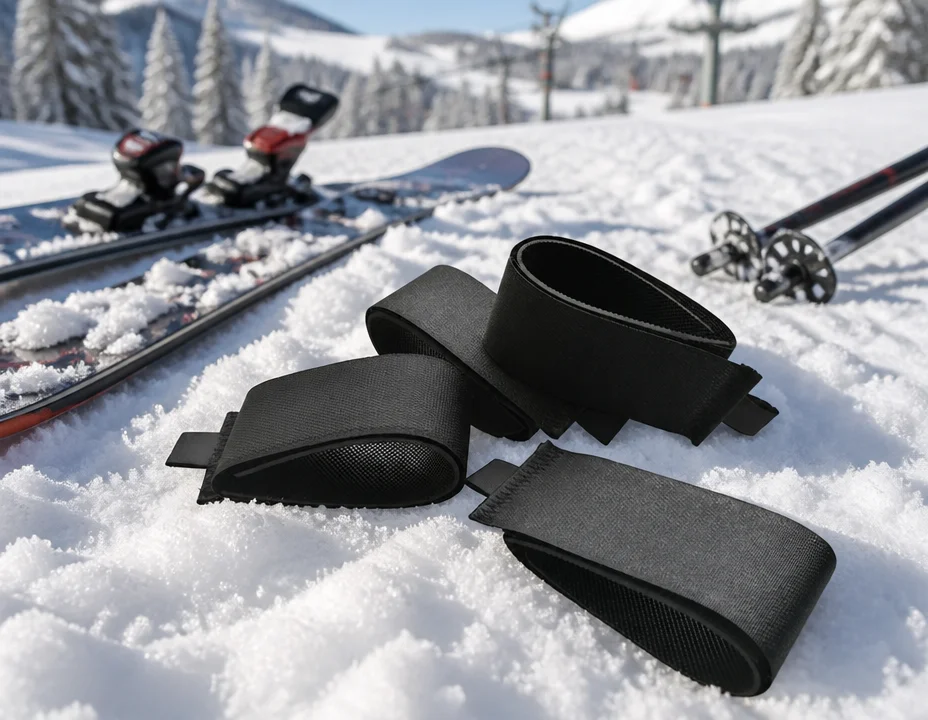
- Hook & loop ski straps and ski carrier straps — the workhorse accessory for rental fleets, ski schools and travel. Adjustable lengths, high-cycle hook and loop fasteners, and custom branding are the standard requests. See our adjustable ski straps with hook and loop fasteners.
- Ski and snowboard bags — padded, reinforced and convertible carry options for both retail and rental replacement cycles.
- Neoprene ski tip protectors and covers — a low-unit-cost add-on that rental shops reorder in volume every season.
- Equipment straps and tie-downs — the same construction logic applied to roof racks, cargo and outdoor gear. Browse the range in our equipment straps category.
Beyond the Snow: The Wider Q4 Window
Snowsports is the seasonal lead, but the same October-to-December window covers the rest of the outdoor calendar. Trail runners restock hydration and carry accessories, hikers refresh trekking straps and repair kits, cyclists move into autumn commuting gear, and pickleball — now a year-round category in North America and Europe — keeps reordering paddle and court accessories through the winter months. A single consolidated order across these lines is usually the difference between a container that clears margin and one that does not. Explore our elite snowsports range and the wider equipment straps collection.
Factory-Direct Sourcing Notes for Q4
Vertasport is a Shenzhen-based OEM/ODM manufacturer of hook and loop straps and outdoor carrying accessories, working factory-direct with sporting goods distributors, rental operators and private-label brands. For Q4 programmes we typically support:
- OEM/ODM development with low MOQ for first orders and scaling quantities on repeats
- Custom webbing, hook and loop fasteners, neoprene grades, colours, logo placement and retail packaging
- REACH and RoHS compliant materials, with test documentation available
- Quotation turnaround inside 24 hours on standard configurations
- Audit support: we can arrange BSCI audit / ISO 9001 recertification on request
If your winter programme still has open SKUs, the practical question this week is not whether to order, but what can still ship by sea in time.
Talk to Us About Your Winter Programme
Send your specifications, target quantities and delivery port, and we will come back with pricing, lead time and a production slot within 24 hours.
Email: hxwdavidli@gmail.com
WhatsApp: +86 134 8014 3331
Whether you need a few thousand adjustable ski straps for a rental fleet or a private-label ski bag programme for next season, factory-direct pricing and a clear shipping date are available now — while the mid-October window is still open.
U.S. Snowboarding Hits 10.6 Million Riders as Killington Fires Up Snowmaking: The October Sourcing Window for Ski Straps and Winter Gear
Snowboarding just posted its biggest participation gain in years, Killington has already fired up its snow guns, and a new ski pole is forcing the industry to rethink the smallest component on the mountain: the strap. For brands and retail buyers planning Q4, the accessory layer — straps, carriers, bags and protectors — is moving first.
Snowboarding Is Now the Growth Engine of U.S. Winter Sports
Snowsports Industries America (SIA) released its 2025-26 Participation Study this month: almost 32 million Americans took part in snowsports last winter, about three percent more than the previous season and the highest total in six seasons. Participation reached 10.3 percent of Americans aged six and older, up from 10.0 percent.
- Snowboarding grew about nine percent to 10.6 million participants, up from 9.7 million and nearly 30 percent higher than in 2021-22.
- Alpine skiing held flat at about 13.2 million participants, still below its 2018-19 peak of 14.9 million. New and returning skiers (6.0 million) exactly matched the number who lapsed.
- Snowboarding skews younger and more diverse: 5.3 million riders are under 25, close to the 5.5 million skiers in that age band, and Hispanic participation rose for a third straight season to 2.2 million from 1.8 million in 2023-24.
Weather shaped how often people rode more than whether they rode. Self-reported skiing days fell nearly six percent and snowboarding days about three percent, with the sharpest drops in the Mountain region, while outings rose for cross-country skiing, snowshoeing, alpine touring and snowboard touring.
“Americans kept coming back to winter this season, even when the snow didn’t cooperate,” said Nick Sargent, president and CEO of SIA. “Snowboarding’s growth, especially among younger and more diverse participants, shows where the next generation of snowsports is coming from.”
Killington Starts Making Snow — the Retail Clock Is Ticking
Killington Resort ran its first major snowmaking test of the 2026/27 season on 6 October, operating six fan guns across three locations during a near-freezing window: four at the bottom of Superstar plus two newly installed SMI Super Puma guns on Mouse Trap and Lower Skyeburst, mounted on automated hydraulic swing arms more than 15 feet long for better throw and coverage in wind-exposed trail convergence zones. The resort, which markets more than 200 trails and 92 miles of terrain across six peaks plus Pico Mountain, says it will make snow as soon as temperatures become optimal; no opening date has been set.
Europe is already moving. Levi and Ruka in Finland opened on 2 October after large-scale snow farming, and the FIS Alpine Ski World Cup returns to the Rettenbach glacier in Sölden on 24-25 October for the 2026/27 season opener.

Why Strap Hardware Is Back in the Design Conversation
The week’s most interesting product story is also the smallest. ONE WAY’s new FR 18 FREE pole, priced at 89 USD, targets freeride and all-mountain skiers with a retractable “Stealth Strap”: pull it from the top cap to engage it for climbing or lift lines, then release it and it disappears into the grip. The pole runs an aluminium 7075 shaft in an 18-9 mm taper, weighs 280 g per pole (255 g at 125 cm) and ships with swappable backcountry and summer baskets.
Behind the design is a genuine safety debate. The Utah Avalanche Center warns that a pole attached to a skier during a slide can act “almost like a boat anchor,” and safety guidance from Sierra-at-Tahoe, Ski Utah, the American Alpine Institute and Deep Snow Safety converges on the same advice: remove pole straps in deep snow or tree-well terrain. The sourcing lesson is that straps are now engineered, safety-relevant components rather than commodity trim.
What It Means for Q4 Sourcing Decisions
- Accessories move first. When participation rises and resorts start making snow early, re-orders land first on low-tooling items — adjustable ski straps and hook-and-loop fasteners, ski carrier straps, snowboard straps and neoprene protectors — because they can be restocked without long mould lead times.
- The customer base is younger and more diverse. Snowboarding’s growth came from under-25 riders and first-time participants, which supports graphics-led and colour-led programmes over conservative one-colour assortments.
- Specify the hardware, not just the price. After the pole-strap debate, buyers who can document strap strength, release behaviour and material compliance hold the stronger hand with retail partners.
Vertasport supplies that hardware layer factory-direct: hook-and-loop ski and snowboard straps, ski carrier and equipment straps, ski bags and neoprene protectors, alongside running, trail running, hiking, cycling and pickleball accessories. Focus categories include elite snowsports, equipment straps, trail running, high hiking, elite biking and pickleball — all with low MOQs, OEM/ODM customisation, REACH and RoHS compliant materials and quote replies within 24 hours. Where certification documentation is needed, we can arrange a BSCI audit or ISO 9001 recertification on request.
Talk to the Factory Before the Season Peaks
Strap, bag and protector programmes are typically specified eight to twelve weeks before the retail floor set, and pre-season orders are being placed now. Send your drawings, dimensions or a sample, and we will come back with tooling-free options, material recommendations and a factory-direct quotation within one working day.
Email: hxwdavidli@gmail.com | WhatsApp: +86 134 8014 3331
Padel Hits One Million U.S. Players as Pickleball Holds 24 Million: The Q4 Sourcing Window for Court Gear and Snowsports
Two very different corners of the outdoor sports market are converging on the same buying window this October. New U.S. participation data shows padel crossing one million players for the first time, while pickleball — now several years into its boom — holds a base of roughly 24 million. At the same time, Austrian glaciers are already spinning lifts and North American resorts are finalising their 2026/27 opening dates. For wholesale buyers, that overlap compresses court gear and winter gear into a single Q4 sourcing calendar — and it changes what belongs on the order sheet.
Padel’s First Million: What the 2026 Participation Data Shows
According to the 2026 SFIA Topline Participation Report, more than 1.07 million Americans played padel in 2025 — the first time the sport has passed the one-million mark in the United States. Reported growth reached 14.5%, and capital is following the participation curve: Playtomic’s Global Padel Report 2026 counted nearly 5,000 new padel clubs and almost 8,000 new courts added worldwide during 2025. In the U.S. specifically, industry trackers now count more than 480 courts in the 2026–2027 pipeline across 140-plus clubs that are under construction or in planning.
For accessory suppliers, the interesting number is not the headline. It is the ratio of courts to bags, covers and retention straps — every new court converts into a recurring consumable and accessory demand that sits upstream of the racket brands.
Pickleball’s 24 Million Base: A Maturing Market, Not a Shrinking One
Pickleball’s headline is slower but far larger: roughly 24 million U.S. players, with participation growth of about 1.3% in the same reporting cycle. Analysts covering racquet sports through 2026 describe this as a market maturing from explosive adoption into replacement and upgrade demand — the stage where buyers stop chasing novelty and start specifying paddle bags, covers and hook-and-loop straps on durability, finish and landed cost.
Court Sports and Snowsports Now Share One Q4 Calendar
Winter has already started at altitude. Austria’s Pitztal Glacier opened for the 2026/27 season on 26 September, and Hintertux and Sölden followed on 2 October. In North America, Vail Resorts has published its 2026/27 opening dates while forecasters track a building El Niño pattern. Retail timing is tightening in parallel: Mastercard’s 2026 holiday forecast projects U.S. holiday retail sales growing around 5.5%, with AI-assisted shopping reshaping how gear is discovered.
The practical consequence for brands and distributors is that court gear and snow gear are now competing for the same shelf space, the same marketing calendar and the same container slots. Buyers who finalise specifications in October still have time to consolidate court and winter accessories into one production run, one inspection cycle and one shipment — instead of paying for two.
What Buyers Are Specifying for the 2026/27 Season
Across incoming briefs for this season, the requirements repeat with little variation:
- Adjustable ski and carrier straps built on reinforced hook-and-loop, with custom widths, lengths and branded webbing — the workhorse of every snowsports accessories programme.
- Paddle bags and covers with ripstop shells, neoprene padding and printed or woven logo placement.
- Neoprene protectors for rackets, ski edges and bicycle frames, where wall thickness and lamination quality decide the return rate.
- Reflective trims, machine-washable finishes and colour-fast webbing for trail running and hiking lines that will be worn in low light.
None of these are hero products. All of them are the components that decide whether a retail programme ships complete — which is exactly why buyers increasingly source them from a single factory rather than assembling them from three trading companies.
Sourcing the Q4 Window Factory-Direct
Vertasport has manufactured hook-and-loop straps and sports accessories for more than 16 years, supplying OEM and ODM programmes for snowsports, running, hiking, cycling and court-sport brands. Materials are REACH and RoHS compliant, tooling and sampling are handled in-house, and MOQs are set low enough for first orders and seasonal test runs. Where buyers need documentation for their own compliance files, we can arrange a BSCI audit or ISO 9001 recertification on request.
Specifications received in October can still be sampled, approved and produced inside the Q4 window. Send your drawings, target price and quantities and we will come back with a quotation — normally within 24 hours.
Contact: sales@vertasport.com · WhatsApp +86 134 8014 3331
Alpine Resorts Switch On Winter 2026/27: Zermatt’s CHF 43 Million Bet, Dolomiti Superski’s €89 Day Pass and the Q4 Sourcing Window for Ski Straps
Industry news · 8 October 2026 · Snowsports, outdoor gear and sourcing
The first full week of October 2026 has pushed the European Alps out of planning mode and into build mode. Zermatt has signed off on a CHF 43 million infrastructure programme, Dolomiti Superski has published its 2026-27 skipass tariffs with a peak day ticket now at €89, and resorts from Gastein to the U.S. Midwest are commissioning new lifts, new snow guns and new all-weather attractions. For retailers, distributors and private-label brands, this is the moment when winter demand becomes a hard purchasing decision — and when the Q4 order window for ski straps, carrier straps, bags and neoprene protectors starts to close.
Zermatt Puts CHF 43 Million Behind Snow Reliability
Zermatt Bergbahnen is committing roughly CHF 43 million to infrastructure and destination development in the 2025/26 financial year, with lift modernisation and snow reliability at the centre of the plan (Snow Industry News, 7 October 2026). The headline project is the new eight-seater Gifthittli chairlift, built by Leitner, which replaced a six-seater that had run for more than two decades. The new lift carries up to 3,400 passengers per hour at speeds of up to six metres per second, and the project alone accounts for CHF 25 million.
The strategic detail matters more than the headline number. Zermatt is targeting the ability to cover its main pistes in roughly 72 hours when temperatures allow — a direct response to short, unpredictable cold windows. The resort tested exactly that approach last winter, using its snowmaking network and piste preparation to hold the peak-season product together despite limited pre-Christmas snowfall. Resorts are no longer buying snow; they are buying speed and certainty.
Dolomiti Superski Prices the Peak — and Keeps Investing
Europe’s largest interconnected ski network has confirmed its 2026-27 pricing. Across 12 ski areas, roughly 1,200 kilometres of pistes and around 450 lifts, the highest adult day ticket rises to €89 in peak periods, with standard and pre-season day tickets at €80 and a six-day pass at €453 in high season (Snow Industry News, 7 October 2026). Peak pricing applies from 20 December 2026 to 9 January 2027 and again from 31 January to 20 March 2027.
Higher tickets are funding higher capex. Industry sources point to a substantial lift modernisation programme across the consortium for winter 2026-27, including new gondolas and upgraded chairlifts in Kronplatz, Val Gardena, Gitschberg Jochtal, Alpe di Siusi and Obereggen. Digital ticketing is being pushed just as hard, with a 5% discount for passes bought at least two days in advance and the My Dolomiti Card allowing skiers to move straight to the lifts.
The pattern is consistent across the Alps: premium pricing, premium infrastructure, and a customer who arrives expecting gear that performs and lasts.
Gastein, Snow Trails and the Wider Investment Wave
In Austria, Gasteiner Bergbahnen is moving into 2026-27 with a two-track strategy — broaden the mountain offer beyond skiing, then harden the snowmaking core. The company reported growth across its three summer mountains and has completed an approximately €1 million family adventure area at Schlossalm plus the roughly €12 million Hirsch & Maus mountain restaurant, with total investment reaching €16.1 million. Chairman Andreas Innerhofer has signalled that future spending will lean further into snowmaking and piste preparation, and a new indoor digital attraction is scheduled to open in mid-December. Partial operations are planned from 27 November 2026 (Snow Industry News, 8 October 2026).
In the United States, Snow Trails is heading into its 66th winter with new chairs, new snow guns and a new tubing building — the same logic of investing through long-established infrastructure. On the supplier side, Austrian ski manufacturer Kästle has created an advisory board and appointed Scott Mellin as its chairman, while the trade calendar heads toward ISPO’s Amsterdam edition at RAI Amsterdam from 3–5 November 2026.
A Second, Louder Signal: Gear Keeps Circulating
One of the most-read snowsports stories of the week was not about a lift at all. Reports describe thousands of American shoppers travelling south for deals on ski gear recovered from lost luggage — a reminder of how deep and how price-sensitive the North American snowsports customer base has become. Demand is not only for new premium hardgoods; it is for the straps, bags, covers and protectors that let people move, store and protect equipment they already own.
The Q4 Sourcing Window for Ski Straps and Outdoor Gear
For buyers, October is a decision month rather than a browsing month. Winter 2026/27 inventory is being locked, and the components that sell alongside hardgoods — adjustable ski carrier straps, hook-and-loop snowboard straps, ski and boot bags, neoprene edge and goggle protectors — are ordered now so they land before the Christmas and February peaks.
Three practical points from this week’s news:
- Snowmaking and lift upgrades protect opening dates, not gear budgets. Resorts are guaranteeing terrain; retailers still have to guarantee accessory availability. Late accessory orders are the most common reason a promising winter season under-delivers at the till.
- Premium pricing supports premium accessories. When a day ticket costs €89, a customer who has just paid for it is far less willing to accept a strap that slips or a bag that fails in transit.
- The season is no longer a single season. Alpine destinations are investing in year-round offerings, which means trail running, hiking and biking accessories now sell through the same channels in the same calendar year as snowsports — a chance to raise order value per shipment.
Explore the ranges that map onto this demand: elite snowsports and ski straps, equipment and tie-down straps, trail running gear, hiking accessories, cycling gear and pickleball equipment.
Factory-Direct Ski Straps and Outdoor Gear — Built for Q4
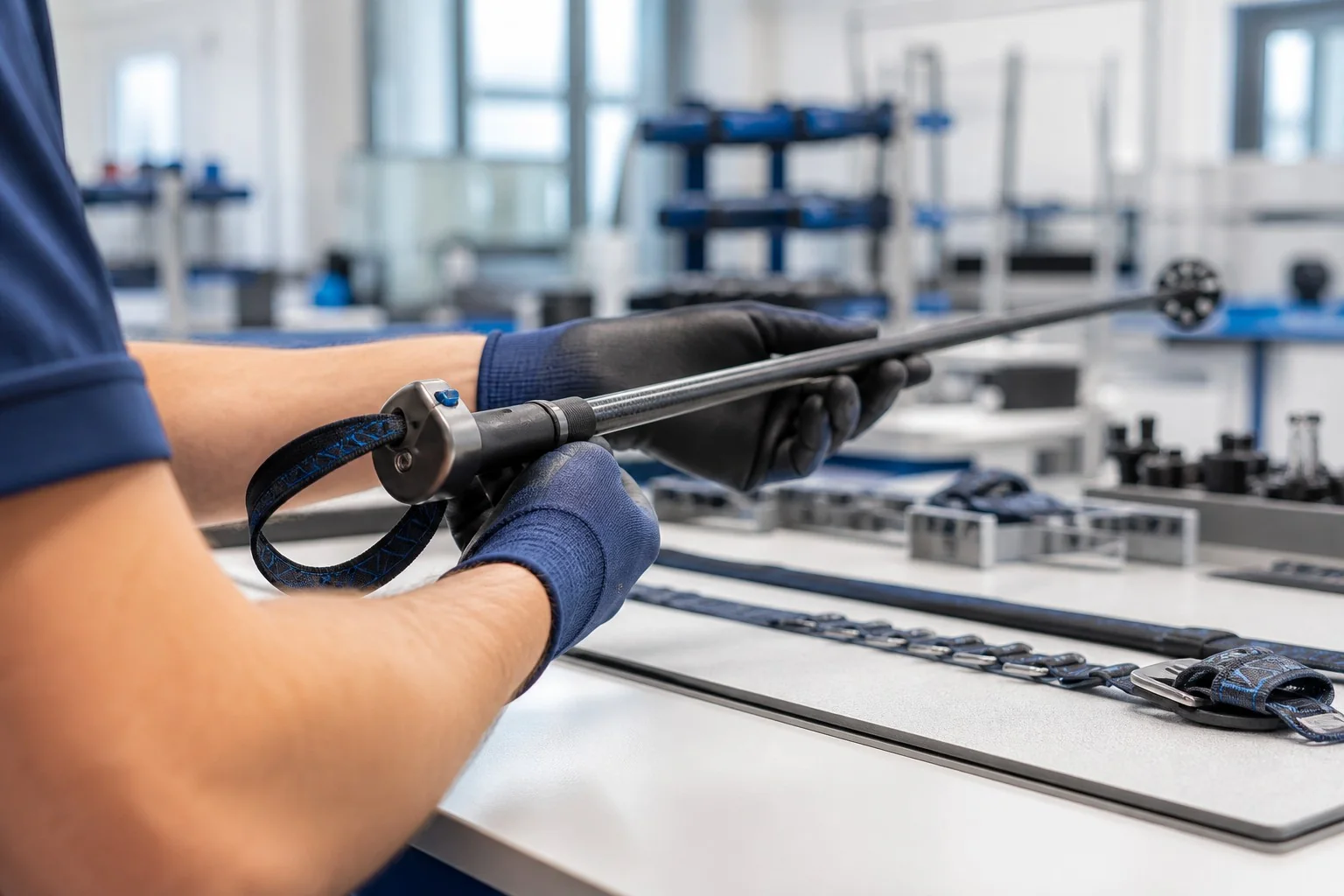
Vertasport (Shenzhen Hongxiangwen Hook & Loop Co., Ltd.) manufactures ski straps, hook-and-loop equipment straps, motorcycle tie-down straps, ski and snowboard bags and neoprene protectors for brands, distributors and retail chains worldwide. As a factory-direct OEM/ODM supplier we work with low MOQs for new programmes, offer custom sizing, colours, printing and packaging, and use REACH and RoHS compliant materials as standard. Where a buyer’s compliance documentation requires it, we can arrange BSCI audit and ISO 9001 recertification on request.
A representative starting point is our adjustable ski straps with hook-and-loop fasteners, produced for wholesale programmes with custom branding. Send your specifications, target volumes and packaging requirements and we will respond with a quotation — typically within 24 hours.
Ready to lock in winter 2026/27? Email sales@vertasport.com or message us on WhatsApp with the items, quantities and delivery window you are working to. We will come back with pricing, lead times and samples.
Winter 26/27 Drops Land: WHITESPACE, POC and the Q4 Sourcing Window for Ski Straps and Outdoor Gear
October 7, 2026 — Winter 2026/27 product drops, confirmed race dates and a leadership change at one of North America’s largest resort groups all landed inside 48 hours this week. For outdoor brands and distributors, that combination is the clearest signal yet that the fourth-quarter sourcing window for ski, trail, hiking, cycling and court-sport accessories is now open.
Brand Launches Put Winter 26/27 on the Shelf
On October 6, WHITESPACE — the performance equipment brand founded by snowboarder Shaun White — launched its F26 Performance Collection, a 41-style lineup spanning men’s and women’s outerwear, baselayers, goggles and accessories alongside eight snowboards, according to the release carried by Outdoor Sportswire. The same day, Swedish protection brand POC unveiled its Winter 26/27 ski goggle and apparel collection, built around a new goggle platform.
For component and accessory suppliers, launches like these matter less for their own volumes than for what they reveal about timing: the hardgoods and softgoods retailers will be selling in January are already shipping in October. Strap, bag and protection orders for the coming season are being placed now — not in December, when production queues and freight capacity are both tight.
Race Calendars and Resort Dates Are Already Committed
The 2026/27 FIS Alpine World Cup season opens on the Rettenbach Glacier in Sölden, Austria, with the women’s giant slalom on October 24 and the men’s giant slalom on October 25 — the traditional start of the racing calendar. Sölden’s own glacier ski area is scheduled to open in early October, roughly six weeks ahead of the main ski area around Giggijoch and Gaislachkogl, which the resort calendar expects to follow on November 12.
In North America, the projected opening dates tracked by OnTheSnow list Colorado’s 2026/27 season as starting from October 9, with Arapahoe Basin widely reported as the front-runner in the annual race to open first. Whether or not every date holds, lift-served skiing in the Rockies is now weeks — not months — away, and that is the point at which rental fleets, ski schools and retail shelves have to be fully stocked.
A freeride line in the Alps: winter 26/27 deliveries are moving now, and ski straps, ski bags and neoprene protectors are part of that first wave.
Retail: Record Participation, Real Consolidation
The demand side of the market looks solid. The Outdoor Industry Association’s 2026 Outdoor Participation Trends Report puts participation at a record 183.2 million Americans — 59% of the population — the highest level recorded in the report.
The supply side is still consolidating. SGB Media reported on October 5 that Alterra Mountain Company, the group behind destinations including Mammoth Mountain and Steamboat, appointed hospitality and operations veteran Kelly Vohs as chief executive officer, effective October 19. In the same week, Salomon opened its first full-price UK store outside London, in Liverpool, while Quebec outdoor chain La Cordée announced it will close after 70 years of trading.
For OEM buyers the read-through is straightforward. Participation is broadening while retail moves toward fewer, larger and more digitally driven operators — and those operators place consolidated seasonal programs with suppliers who can hold specifications, colors and lead times steady from first sample to final reorder.

Trail running and hiking continue to broaden the outdoor consumer base — the same buyers who need straps, bags and protectors in volume.
What to Lock Down in the October Window
October is the narrowest month of the outdoor calendar. Ski shops are merchandising hardgoods, running and trail retailers are planning spring carry-over, and cycling and racket-sport distributors are still filling winter programs. Practical priorities for buyers right now:
- Ski and snowboard straps and carrier systems — adjustable hook and loop ski straps, carrier straps and luggage straps in branded colors, packed for retail or bundled with bags.
- Ski, snowboard and gear bags — 600D-class polyester and waterproof laminates, with the strap and buckle hardware specified as one system rather than sourced separately.
- Neoprene protectors — edge guards, boot and binding covers, and padded sleeves for the tuning and travel segment.
- Hook and loop accessories across the other five categories — run and trail hydration straps, hiking pole and pack straps, cycling frame and cargo straps, and pickleball paddle and bag straps.
All VERTASPORT materials are REACH and RoHS compliant, and we can arrange a BSCI audit or ISO 9001 recertification on request for buyers who need updated documentation in their vendor files.
Six Categories, One Sourcing Window
VERTASPORT manufactures factory-direct OEM and ODM straps, bags and protection for the six categories driving this season’s demand:
- Ski and snowboard gear — including adjustable ski straps with hook and loop fasteners
- Equipment and tie-down straps
- Trail running accessories
- Running accessories
- Hiking straps and gear
- Cycling and biking straps and pickleball accessories
Talk to the Factory Before the Window Closes
If your 2026/27 program still has open accessory lines, send your specifications, target quantities and artwork. Low MOQ trial orders are available, custom logo, color and packaging are standard, and quotes are typically returned within 24 hours.
Email: sales@vertasport.com · WhatsApp: +86 134 8014 3331